
Scanner (iTero, Trios)
No trays. No paste. Just a clear digital scan.
If you’ve experienced dental impressions made with putty and trays before, you likely remember what that was like – bulky, uncomfortable, and sometimes hard to get through.
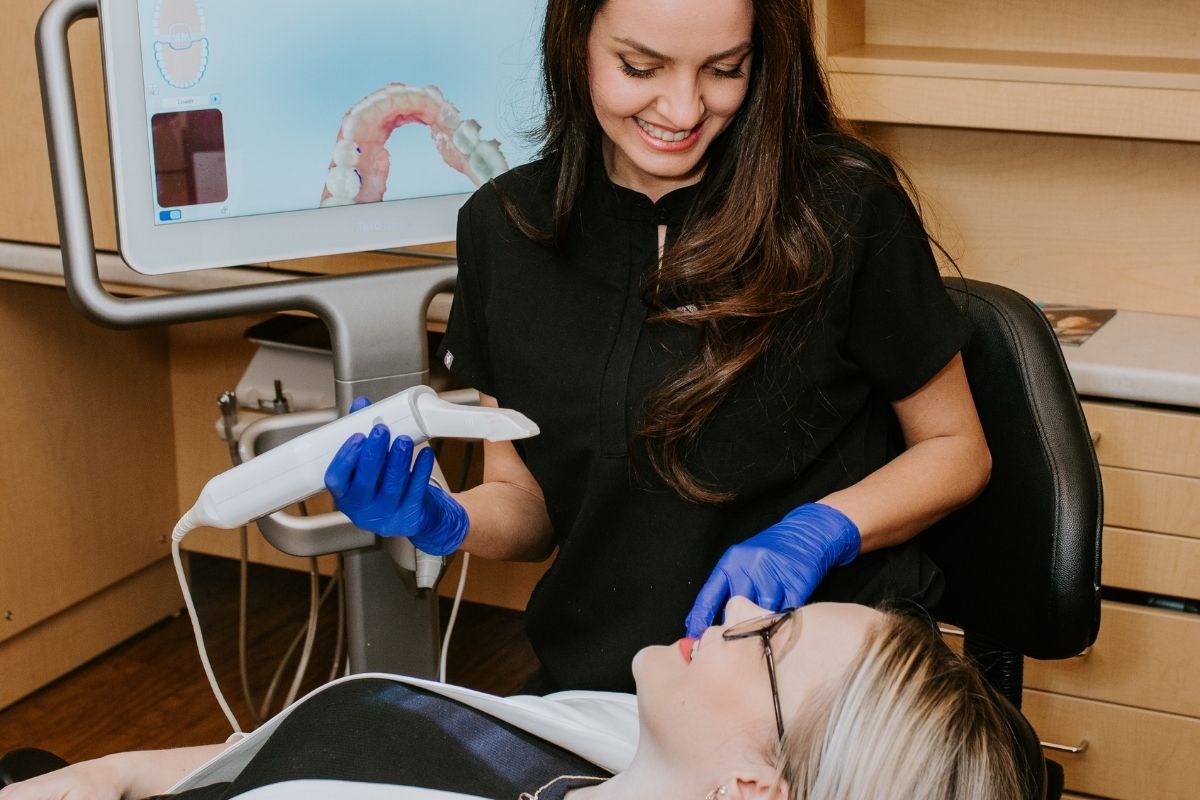
Those days are behind us. With iTero and Trios scanners, your dentist gently guides a compact handheld device around your mouth to capture a full, detailed image. No mess, no holding still with a mouthful of material. Just a brief scan and a complete 3D model displayed on screen before you leave the chair.
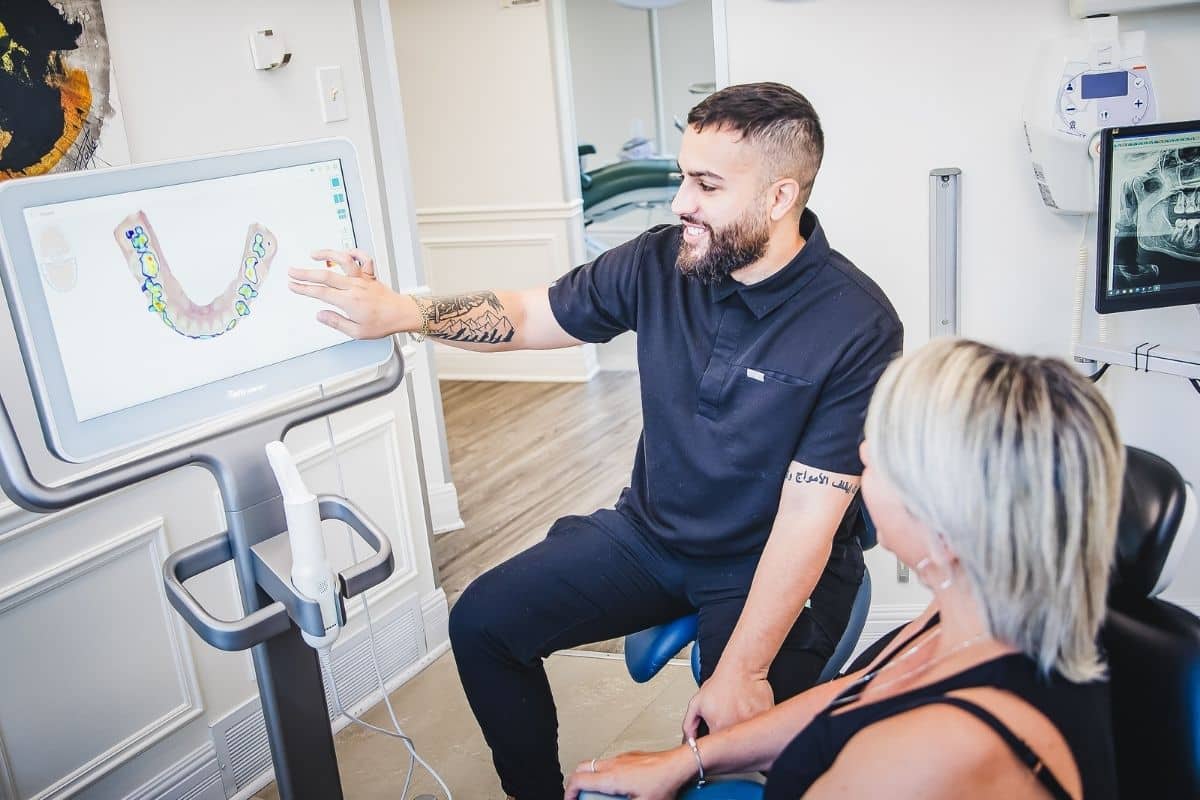
A simpler way to get the detail your dentist needs.
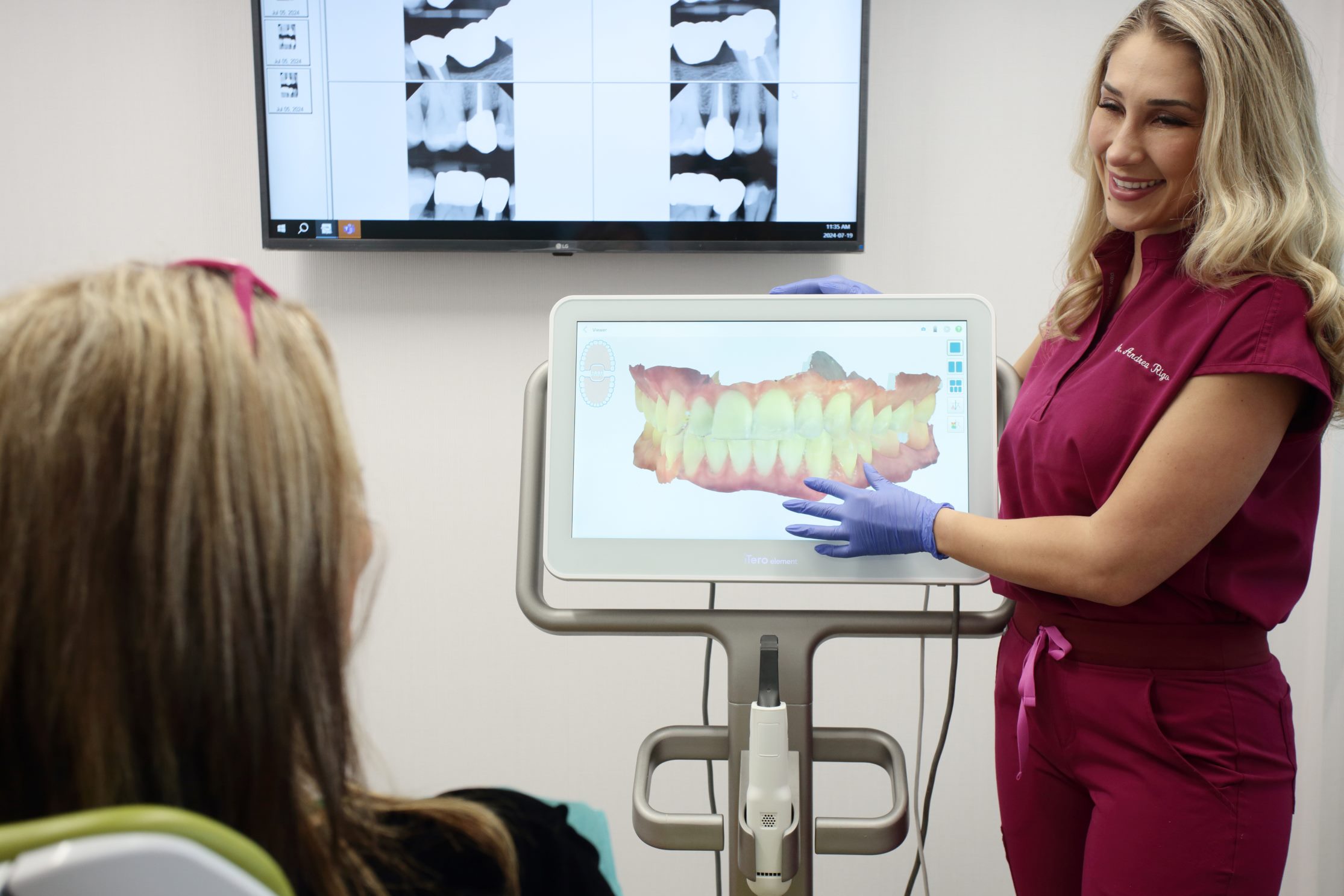
Digital scanners such as iTero and Trios produce an accurate, three-dimensional map of your teeth, gums, and bite. Rather than using molding compounds, your provider captures everything using a light-based wand with no radiation required.
These scans aren’t just more comfortable for you. They also give your dentist richer information to work with, which leads to better treatment planning, improved results, and fewer unexpected issues along the way.
You might receive a scan if:
• You’re beginning Invisalign or clear aligner treatment
• You need a crown, bridge, or custom veneer
• You’re being fitted for a night guard or sports mouthguard
• Your dentist wants to track bite or gum changes over time
• You’ve had difficulty tolerating traditional impressions in the past
It’s a small shift in how things are done, but one that makes every step that follows feel much smoother.
No pressure. No gagging. Just a smooth, quiet scan.
No preparation is needed on your end. You simply relax while your provider carefully moves the scanner across your teeth. As they work, a digital model builds up on the screen in real time, like watching a 3D image take shape right before your eyes.
Here’s what the process typically looks like:
• The wand-shaped scanner is gently guided along your upper and lower teeth
• The image appears live on screen as each section is captured
• If any area needs a closer look, your provider will go over it again right away
• Once finished, the scan is reviewed and sent to the lab or used directly for treatment planning
The entire process usually takes just a few minutes, and most patients are pleasantly surprised by how comfortable and quick it is.
Your dental questions, answered.
Better imaging. Less hassle. And a clearer path forward.
Whether you’re looking at a simple restoration or a full orthodontic plan, digital scanning helps make your appointment more comfortable and your treatment more accurate. No mess, no discomfort. Just a better way to get started.