
Retainers
Retainers keep your smile steady after the braces come off.
Braces shift your teeth into position. Retainers make sure they stay there. Once the wires are removed or the final aligner is complete, your teeth are still in a somewhat unsettled state. Left on their own, they’ll gradually try to creep back toward where they used to be.
That’s exactly what a retainer is designed to prevent. It holds your corrected alignment in place while your teeth settle into their new positions for good. Most patients begin by wearing one full-time and gradually move to nights only. Some need it for several months, while others wear one long-term. The right type, schedule, and plan all come down to your teeth and how prone they are to shifting.


This is care that protects the results you worked for.
Retainers are straightforward devices, but they carry a lot of weight when it comes to preserving the time and effort you’ve already invested. They’re most commonly recommended right after orthodontic treatment wraps up, though in certain situations a retainer alone can guide minor tooth movement without braces being needed at all.
Your provider will suggest the best fit for your situation. That might mean one arch, or it might mean both. It could be a short-term solution or something you return to nightly for years. Whatever the recommendation, the goal is the same – prevent relapse and keep your smile right where it belongs.
It’s not one-size-fits-all. And it’s not forever.
Several types of retainers are available, and each one has strengths depending on what you need.
• Bonded retainers are fixed in place behind the front teeth. A thin wire is cemented directly to the teeth, making them a great choice for anyone who might forget to put a removable retainer back in.
• Hawley retainers combine a molded plastic base with a wire that runs across the front. They’re long-lasting and can be adjusted over time, though they tend to be a bit bulkier than other styles.
• Clear plastic retainers are custom-fitted and nearly invisible when worn. They’re comfortable and discreet, though they do need to be replaced more frequently than other options.
Most patients wear their retainer around the clock at first, taking it out only to eat or drink anything other than water. Your provider will let you know when it’s appropriate to cut back on wear time. In the meantime, avoid skipping days on your own – teeth have a strong memory for their old positions and can shift faster than you’d expect.
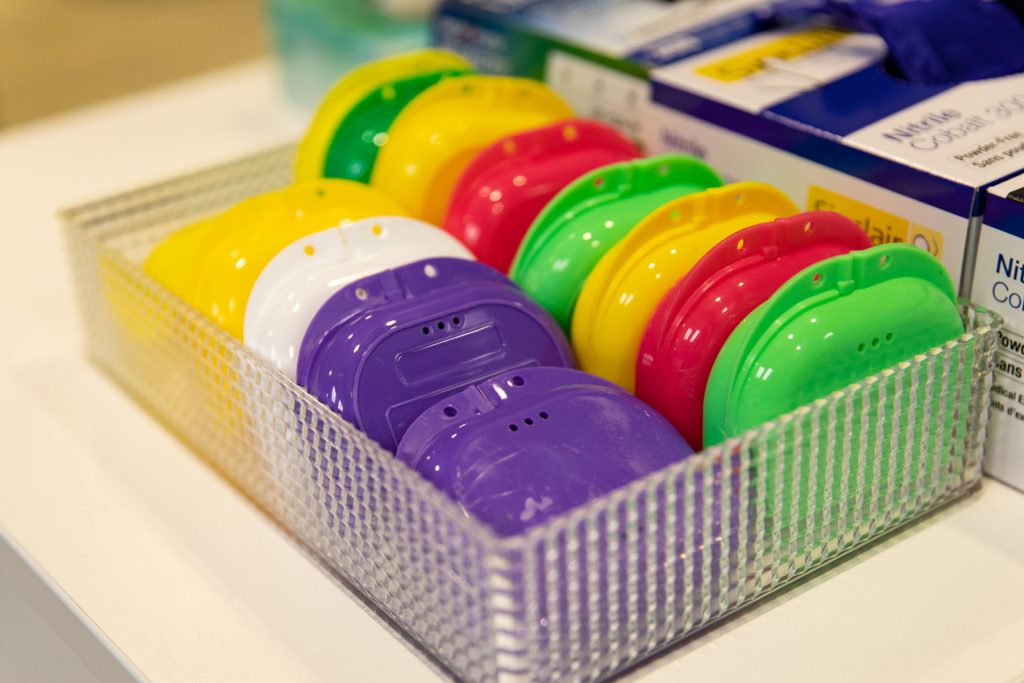
Your retainer questions, answered.
Keep Your Smile in Place with the Right Retainer.
Your teeth have come a long way – don’t let them drift back. Whether you’re wrapping up orthodontic treatment or looking for a reliable long-term retention plan, a custom retainer will help keep your smile exactly where it should be. Find the right solution for your needs today.