
Dental Implant vs Bridge: Which Is the Better Long-Term Solution?
Missing a tooth can affect more than just your smile. It can impact how you chew, speak, and maintain the health of your surrounding teeth. Fortunately, modern dentistry offers several effective ways to replace a missing tooth, with dental implants and dental bridges being two of the most common options.
While both treatments can restore your smile and function, they work very differently and each comes with its own advantages and considerations.
What Is a Dental Bridge?
A dental bridge replaces a missing tooth by using the teeth on either side of the gap for support. The neighboring teeth are prepared and fitted with crowns, while an artificial tooth fills the space in between.
Bridges have been a reliable treatment option for many years and can often be completed in a shorter timeframe than dental implants.
The Drawbacks of a Dental Bridge
One of the biggest challenges with a bridge is keeping it clean.
Because multiple teeth are connected together, it can be difficult to clean underneath the artificial tooth. Patients often need special flossing tools or cleaning devices to properly maintain the area. Without diligent oral hygiene, bacteria and plaque can accumulate beneath the bridge, increasing the risk of decay and gum disease around the supporting teeth.
Another consideration is the lifespan of a bridge. While bridges can last many years with proper care, they often need to be replaced over time. In many cases, the average lifespan of a bridge is approximately 10 to 15 years.
Perhaps the most significant disadvantage is that healthy neighboring teeth must be altered to support the bridge. Even if those teeth are completely healthy and free of decay, a portion of their natural structure must be removed to place the crowns that hold the bridge in place.
What Is a Dental Implant?
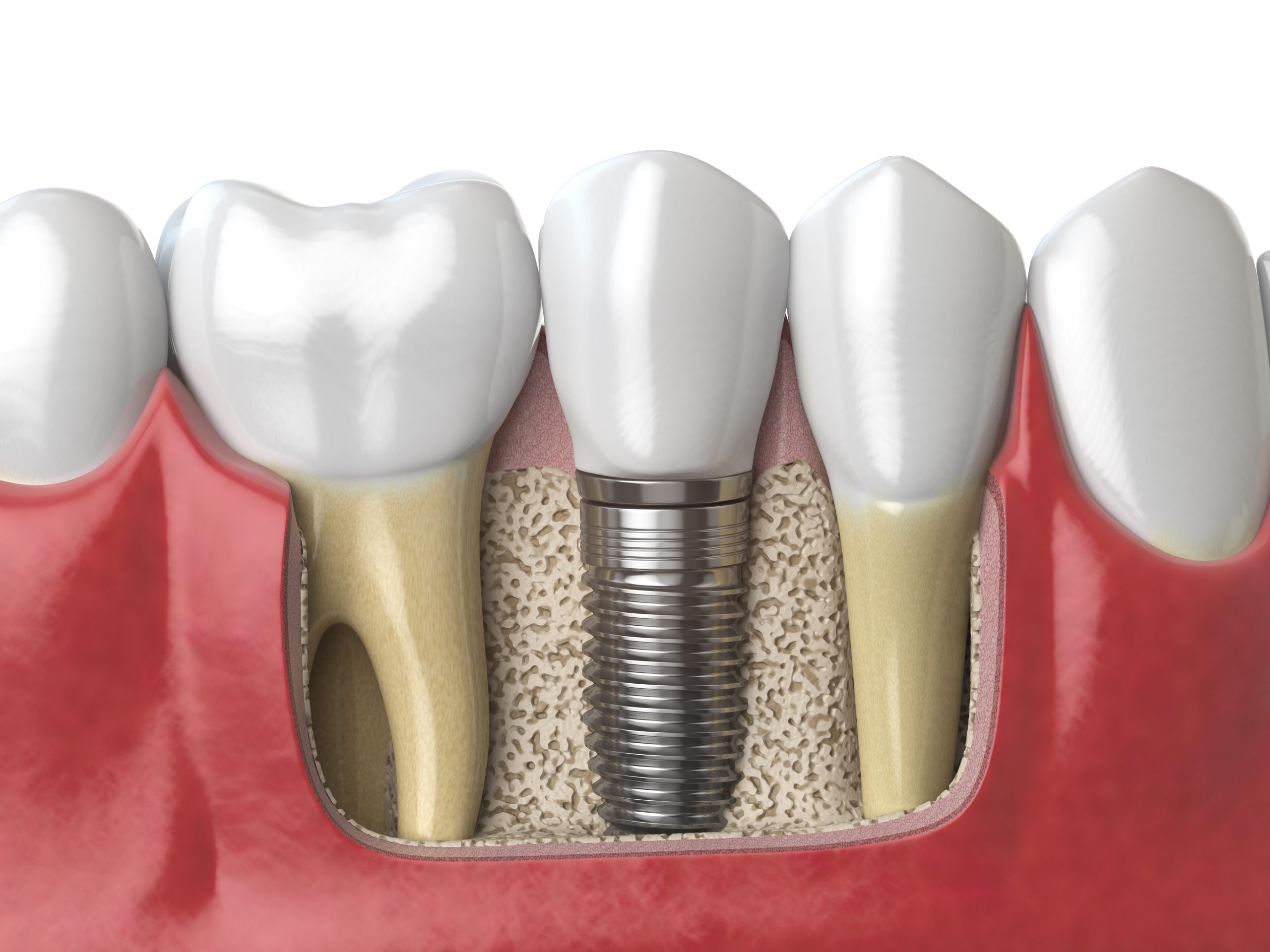
A dental implant replaces both the root and crown of a missing tooth.
A small titanium implant is placed into the jawbone where the missing tooth once existed. After the implant integrates with the bone, a custom-made crown is attached, creating a replacement tooth that looks, feels, and functions much like a natural tooth.
Unlike a bridge, an implant does not rely on neighboring teeth for support.
Benefits of Dental Implants
Dental implants offer several advantages that make them one of the most popular tooth replacement options available today.
They Preserve Healthy Teeth
Because implants are standalone restorations, there is no need to reshape or crown adjacent teeth. Healthy neighboring teeth remain untouched.
They Are Easier to Clean
Dental implants can be brushed and flossed much like natural teeth. Since there is no artificial tooth suspended between other teeth, maintaining good oral hygiene is often simpler.
They Help Maintain Jawbone Health
When a tooth is lost, the jawbone in that area can gradually shrink over time. Dental implants help stimulate the bone and reduce this natural bone loss, helping preserve the structure of the jaw.
They Feel More Like Natural Teeth
Many patients find that implants provide the closest experience to having a natural tooth. Because the implant is anchored directly into the jawbone, it offers excellent stability and function.
Which Option Is Right for You?
Every patient is different.
A bridge may be a good option if the adjacent teeth already require crowns or if an implant is not recommended due to medical or anatomical considerations.
A dental implant may be the preferred choice if the surrounding teeth are healthy and you are looking for a long-term solution that closely mimics a natural tooth.
The best treatment depends on factors such as your oral health, bone structure, budget, and long-term goals.
Want to Learn More About Why Implants Are So Popular?
While both bridges and implants can successfully replace missing teeth, many patients wonder why dental implants are often considered the gold standard in modern dentistry.
For a deeper look at the long-term benefits of dental implants, including how they help preserve bone, simplify oral hygiene, and function like natural teeth, read our companion article on Prompt Health: “Why Dental Implants Are Often Considered the Gold Standard for Tooth Replacement.”
The article explores why many dentists recommend implants as the most natural and durable option for replacing missing teeth.
The Bottom Line
Both dental bridges and dental implants can effectively restore a missing tooth and improve your smile. However, dental implants offer several long-term advantages, including easier maintenance, preservation of healthy neighboring teeth, and a result that closely resembles a natural tooth.
If you’re considering replacing a missing tooth and would like to understand which option is best for your situation, book a consultation with Cedar Tree Dental in Victoria. A personalized assessment can help determine the treatment that best supports your oral health for years to come.red to your needs.
You may also be interested in…

How Long Does Invisalign Take?
3 minute read
Veneers vs. Crowns
4 minute read
How to Choose the Right Cosmetic Dental Treatment
3 minute read