X-Rays (Analog)
The problem might be hidden—but the right X-ray brings it into view.
Your teeth might feel fine. Nothing looks off. But under the surface, there could be more going on—a cavity forming between molars, bone loss starting to show, or signs of infection you’d never see in the mirror.
That’s why X-rays matter. They let your dentist see beyond what’s visible—and find the things that need attention before they turn into something bigger.
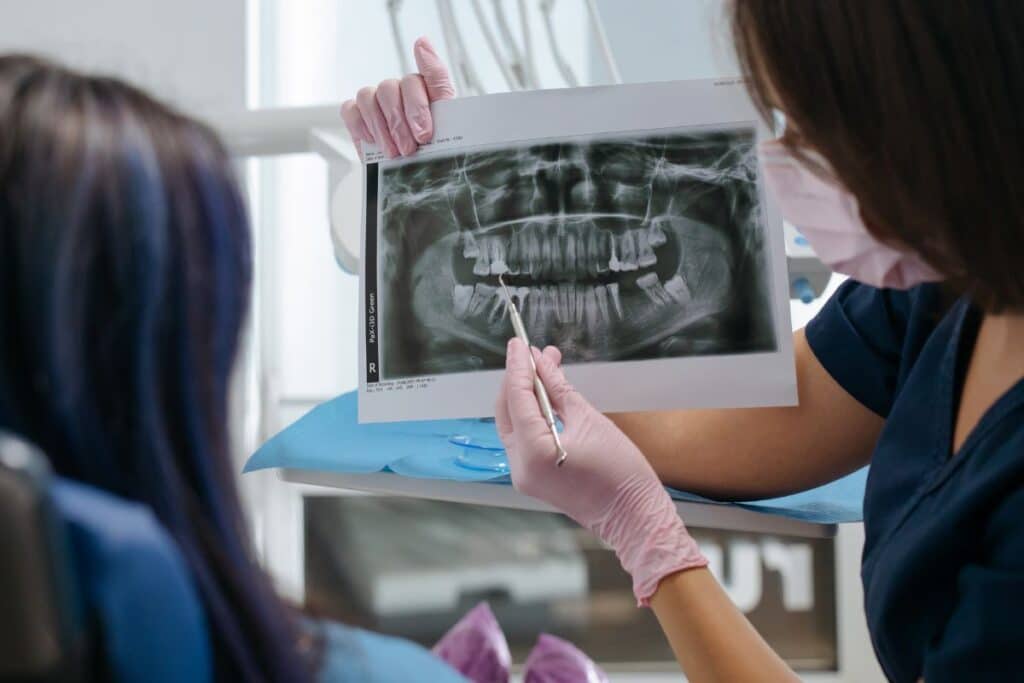

A helpful scan at the right time can spare you trouble later.
Film-based dental X-rays—known as analog—have been part of dentistry for decades. And while they’re not as fast as digital imaging, they still offer a clear, reliable way to catch what can’t be seen with the naked eye.
In some clinics, analog remains the go-to option—whether for routine care or certain types of diagnostic checks. The goal is the same: get a better look, so your care can be more precise.
You might need analog x-rays if:
• It’s your first visit in a while and a full assessment is needed
• You’re dealing with unexplained pain, swelling, or discomfort
• A provider wants to check under crowns, fillings, or deep in the jaw
• There’s concern about infection, bone loss, or hidden decay
• Digital imaging isn’t the right tool for your specific case
It’s not about doing more—it’s about knowing what’s there, so your provider can treat it properly.
It’s quick, easy, and over before you know it.
There’s no prep required. You’ll sit comfortably while your provider explains what they’re capturing and why. Most scans take just a few minutes from start to finish.
Here’s what happens:
• You’ll wear a lead apron for protection
• A small piece of film is gently placed inside your mouth
• A quick snapshot is taken with a sensor outside the cheek or jaw
• The film is developed and reviewed shortly after
• Your dentist will go over what they see and answer any questions
You might take a few images in different positions, depending on what your dentist is checking—but the process is simple, safe, and stress-free.


Your dental questions, answered.
When your provider can see more, they can do more.
Even a small x-ray can change the course of care—spotting what’s hidden, confirming what’s suspected, or giving you peace of mind.
If it’s been a while, this simple step could make all the difference.